How using treats incorrectly in behavioural coaching, causes states of conflict

I want to talk about a very common misconception I see, particularly in those working on behaviours that are related to fear/stress/anxiety: ๐ญ๐ก๐ž ๐ข๐๐ž๐š ๐ญ๐ก๐š๐ญ ๐š ๐๐จ๐  ๐ญ๐š๐ค๐ข๐ง๐  ๐Ÿ๐จ๐จ๐ ๐ข๐ฌ ๐š ๐œ๐ฅ๐ž๐š๐ซ ๐ฆ๐š๐ซ๐ค๐ž๐ซ ๐จ๐Ÿ ๐Ÿ๐ž๐ž๐ฅ๐ข๐ง๐  ๐œ๐จ๐ฆ๐Ÿ๐จ๐ซ๐ญ๐š๐›๐ฅ๐ž.

Itโ€™s an easy mistake to make. Weโ€™ve all seen it: a dog is near a trigger, we offer a high-value treat, and they take it. We assume the dog is comfortable because theyโ€™re taking food. ๐ˆ ๐ฐ๐š๐ง๐ญ ๐ญ๐จ ๐ ๐ž๐ง๐ญ๐ฅ๐ฒ ๐œ๐ก๐š๐ฅ๐ฅ๐ž๐ง๐ ๐ž ๐ญ๐ก๐š๐ญ ๐š๐ฌ๐ฌ๐ฎ๐ฆ๐ฉ๐ญ๐ข๐จ๐ง.

For dogs that are normally quite foody, if they suddenly wonโ€™t take food, it is likely that they are too stressed to do so. They’re telling you they are over their coping threshold. Remember though, that some dogs are just not interested in food in certain situations. Keep an eye on their body language to see if they look stressed or not. They may be more interested in environmental reinforcers, using their senses, and exploring; they may enjoy what the environment can give them, like digging, splashing, watching a squirrel, or just getting on with their walk.

But, coming back to the reason for this post. ๐’๐จ๐ฆ๐ž ๐๐จ๐ ๐ฌ ๐ฐ๐ก๐จ ๐š๐ซ๐ž ๐ก๐ข๐ ๐ก๐ฅ๐ฒ ๐Ÿ๐จ๐จ๐ ๐ฆ๐จ๐ญ๐ข๐ฏ๐š๐ญ๐ž๐ ๐œ๐š๐ง ๐›๐ž ๐ฌ๐ญ๐ฎ๐œ๐ค ๐ข๐ง ๐š ๐ฌ๐ญ๐š๐ญ๐ž ๐จ๐Ÿ ๐ข๐ง๐ญ๐ž๐ซ๐ง๐š๐ฅ ๐œ๐จ๐ง๐Ÿ๐ฅ๐ข๐œ๐ญ ๐š๐ซ๐จ๐ฎ๐ง๐ ๐Ÿ๐จ๐จ๐. ๐“๐ก๐ž๐ข๐ซ ๐›๐ซ๐š๐ข๐ง ๐ข๐ฌ ๐ฌ๐š๐ฒ๐ข๐ง๐  “๐ˆ ๐ง๐ž๐ž๐ ๐ญ๐จ ๐ ๐ž๐ญ ๐š๐ฐ๐š๐ฒ ๐Ÿ๐ซ๐จ๐ฆ ๐ญ๐ก๐ข๐ฌ ๐ฌ๐œ๐š๐ซ๐ฒ ๐ญ๐ก๐ข๐ง๐ !” ๐ฐ๐ก๐ข๐ฅ๐ž ๐š๐ง๐จ๐ญ๐ก๐ž๐ซ ๐ฉ๐š๐ซ๐ญ ๐ข๐ฌ ๐ฌ๐š๐ฒ๐ข๐ง๐  “๐“๐ก๐š๐ญ ๐Ÿ๐จ๐จ๐ ๐ข๐ฌ ๐š๐ฆ๐š๐ณ๐ข๐ง๐ , ๐ˆ ๐ก๐š๐ฏ๐ž ๐ญ๐จ ๐ก๐š๐ฏ๐ž ๐ข๐ญ!”. Judging their internal state purely on if they are taking food is NOT a good marker for them. We HAVE to look at other things too, like their body language, breathing, and so on.

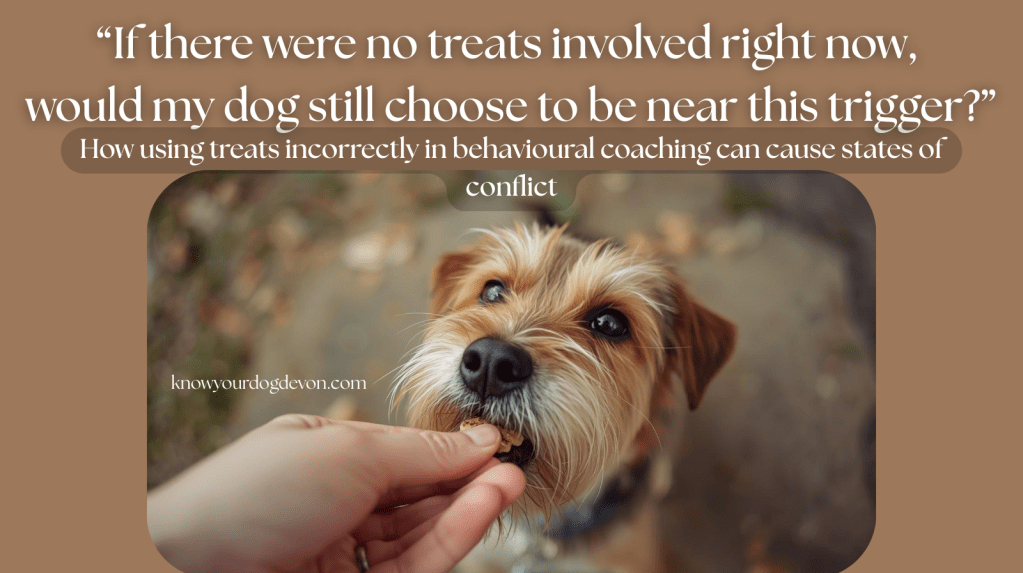
When a dog takes a treat in this state, they’re stuck in a “wobble” between two powerful motivations (the desire to take food, and desire to feel safe). ๐“๐ก๐ข๐ฌ ๐๐จ๐ž๐ฌ๐ง’๐ญ ๐ก๐ž๐ฅ๐ฉ ๐ญ๐ก๐ž๐ฆ ๐Ÿ๐ž๐ž๐ฅ ๐›๐ž๐ญ๐ญ๐ž๐ซ; it can actually cause more stress and lead to unpredictable behaviours as they struggle to cope. ๐“๐จ ๐ค๐ž๐ž๐ฉ ๐ข๐ญ ๐ฌ๐ข๐ฆ๐ฉ๐ฅ๐ž, ๐š๐ฌ๐ค ๐ฒ๐จ๐ฎ๐ซ๐ฌ๐ž๐ฅ๐Ÿ: ๐ข๐Ÿ ๐ญ๐ก๐ž๐ซ๐ž ๐ฐ๐ž๐ซ๐ž ๐ง๐จ ๐ญ๐ซ๐ž๐š๐ญ๐ฌ ๐ข๐ง๐ฏ๐จ๐ฅ๐ฏ๐ž๐ ๐ซ๐ข๐ ๐ก๐ญ ๐ง๐จ๐ฐ, ๐ฐ๐จ๐ฎ๐ฅ๐ ๐ฆ๐ฒ ๐๐จ๐  ๐ฌ๐ญ๐ข๐ฅ๐ฅ ๐œ๐ก๐จ๐จ๐ฌ๐ž ๐ญ๐จ ๐›๐ž ๐ก๐ž๐ซ๐ž (๐ง๐ž๐š๐ซ ๐ญ๐ก๐ข๐ฌ ๐ญ๐ซ๐ข๐ ๐ ๐ž๐ซ)? ๐ˆ๐Ÿ ๐ญ๐ก๐ž ๐š๐ง๐ฌ๐ฐ๐ž๐ซ ๐ข๐ฌ ๐ง๐จ, ๐ญ๐ก๐ž๐ง ๐ฐ๐ž ๐ค๐ง๐จ๐ฐ ๐ญ๐ก๐ž ๐ญ๐ซ๐ž๐š๐ญ๐ฌ ๐š๐ซ๐ž ๐œ๐š๐ฎ๐ฌ๐ข๐ง๐  ๐œ๐จ๐ง๐Ÿ๐ฅ๐ข๐œ๐ญ ๐ซ๐š๐ญ๐ก๐ž๐ซ ๐ญ๐ก๐š๐ง ๐š๐œ๐ญ๐ฎ๐š๐ฅ๐ฅ๐ฒ ๐ก๐ž๐ฅ๐ฉ๐ข๐ง๐ .

๐‘ป๐’‰๐’† ๐‘ญ๐’๐’–๐’๐’…๐’‚๐’•๐’Š๐’๐’ ๐’๐’‡ ๐‘ฉ๐’†๐’‰๐’‚๐’—๐’Š๐’๐’–๐’“

Before we even consider counter-conditioning or desensitisation processes, we must look at the whole picture. ๐๐ž๐ก๐š๐ฏ๐ข๐จ๐ฎ๐ซ ๐ข๐ฌ๐ง’๐ญ ๐ฃ๐ฎ๐ฌ๐ญ ๐š๐›๐จ๐ฎ๐ญ ๐ญ๐ซ๐š๐ข๐ง๐ข๐ง๐ ; ๐ข๐ญ’๐ฌ ๐š๐›๐จ๐ฎ๐ญ ๐ฒ๐จ๐ฎ๐ซ ๐๐จ๐ ’๐ฌ ๐œ๐จ๐ฆ๐ฉ๐ฅ๐ž๐ญ๐ž ๐ฐ๐ž๐ฅ๐ฅ๐›๐ž๐ข๐ง๐ . Asking these questions is crucial and MUST be considered before beginning other coaching:

– Physical Health: Could your dog be in pain or discomfort? Are there other medical issues to factor in, or not yet diagnosed? Any underlying medical issue can contribute to your dogโ€™s behavioural output.

– Diet: Is their diet meeting all their nutritional needs? What they eat can directly impact their mood, health, whatโ€™s going on in their brain, and energy levels.

– Sleep: Is your dog getting enough quality rest? Like us, a lack of sleep can make dogs less able to cope with stress, and effects their physical health.

– Decompression: Are they getting opportunities to simply be a dog? Walks on a long line in a quiet field or garden can allow them to sniff and decompress without the pressure of triggers. Are we offering decompression activities on walks, and at home?

๐‘บ๐’ โ€“ ๐’‰๐’๐’˜ ๐’„๐’‚๐’ ๐’˜๐’† ๐’‰๐’†๐’๐’‘ ๐’•๐’ ๐’‘๐’“๐’†๐’—๐’†๐’๐’• ๐’•๐’‰๐’Š๐’” ๐’”๐’•๐’‚๐’•๐’† ๐’๐’‡ ๐’„๐’๐’๐’‡๐’๐’Š๐’„๐’•?

– Prioritise their body language over treats: before you even reach for the treat bag, look at your dog. Are they yawning? Licking their lips? Is their mouth tight? Can you see the whites of their eyes? These are all signs they are feeling uneasy. Are they trying to put space between themselves and the trigger, either by them moving away, or โ€œlooking scaryโ€ to make the trigger move?

– Manage distance: distance is a dog’s best friend. If your dog is stressed by other dogs, people, or traffic, work at a distance where they are visibly calm and relaxed. If theyโ€™re pulling or showing any signs of stress, you are too close. A common example I see with this being done incorrectly, is asking a dog who is worried by strangers, to take a treat out of the strangers hand. If the dog is motivated enough by food, they probably will take it. Then theyโ€™re next to the thing theyโ€™re scared of. This can easily cause conflict and will not actually help them with their feelings about strangers.

– Control the volume: remember that every trigger adds to the “volume” of a situation. Just because your dog can cope with one person walking past, doesnโ€™t mean they can cope with a whole group. Work on one trigger at a time and slowly build up. Similarly, one calm, senior dog, might be easier for the dog reactive dog to be around, than a collie who is barking whilst waiting for a ball to come out of somebodyโ€™s pocket.

Food can be really helpful in training when used right, but it’s only one part of the picture, and this is why so many people find behavioural coaching using reinforcers โ€œdoes not workโ€ โ€“ they havenโ€™t considered all of the factors, they could be asking too much, the environment might be wrong, or the way they’re doing things might not work for that individual dog. ๐“๐ก๐ž ๐ซ๐ž๐š๐ฅ ๐ฐ๐จ๐ซ๐ค ๐œ๐จ๐ฆ๐ž๐ฌ ๐Ÿ๐ซ๐จ๐ฆ ๐š๐ฌ๐ฌ๐ž๐ฌ๐ฌ๐ข๐ง๐  ๐ญ๐ก๐จ๐ฌ๐ž ๐Ÿ๐จ๐ฎ๐ง๐๐š๐ญ๐ข๐จ๐ง๐ฌ ๐Ÿ๐ข๐ซ๐ฌ๐ญ, ๐ฅ๐ข๐ฌ๐ญ๐ž๐ง๐ข๐ง๐  ๐ญ๐จ ๐จ๐ฎ๐ซ ๐๐จ๐ ๐ฌ’ ๐ฌ๐ฎ๐›๐ญ๐ฅ๐ž ๐œ๐ฎ๐ž๐ฌ, ๐š๐ง๐ ๐œ๐ซ๐ž๐š๐ญ๐ข๐ง๐  ๐š๐ง ๐ž๐ง๐ฏ๐ข๐ซ๐จ๐ง๐ฆ๐ž๐ง๐ญ ๐ฐ๐ก๐ž๐ซ๐ž ๐ญ๐ก๐ž๐ฒ ๐๐จ๐ง’๐ญ ๐ก๐š๐ฏ๐ž ๐ญ๐จ ๐œ๐ก๐จ๐จ๐ฌ๐ž ๐›๐ž๐ญ๐ฐ๐ž๐ž๐ง ๐ญ๐ก๐ž๐ข๐ซ ๐ฌ๐š๐Ÿ๐ž๐ญ๐ฒ ๐š๐ง๐ ๐š ๐›๐ข๐ญ ๐จ๐Ÿ ๐ฌ๐š๐ฎ๐ฌ๐š๐ ๐ž.

If you want to learn more about dog behaviour and increasing their agency within coaching, then get a copy of my book Empowering Your Dog Through Choice on Amazon.

Sally Lewis 2025
Why I Say “No” To Prong Collars

As dog guardians, we all want to enjoy peaceful walks and a calm, happy home life with our companions. When our dog pulls on the leash, barks at other dogs, or seems anxious, it’s natural to feel frustrated and seek a solution. You may have heard about prong collars and been told they are a quick and effective tool. However, based on my professional experience and scientific research, I want to explain why I do not recommend them and why they often create more problems than they solve.

๐“๐ก๐ž ๐‘๐จ๐จ๐ญ ๐จ๐Ÿ ๐ญ๐ก๐ž ๐๐ซ๐จ๐›๐ฅ๐ž๐ฆ: ๐๐š๐ข๐ง, ๐…๐ž๐š๐ซ, ๐š๐ง๐ ๐€๐ฉ๐ฉ๐ซ๐ž๐ก๐ž๐ง๐ฌ๐ข๐จ๐ง

A prong collar works by causing discomfort or pain when a dog pulls, lunges, or a correction is applied through the lead. The blunted prongs apply pressure to the neck, and while the pain may be momentary, the psychological impact can be lasting. A dog quickly learns that pulling or reacting can lead to an uncomfortable sensation.

This creates a constant state of apprehension for the dog. They are not learning to walk behave differently because the cause of the behaviour has improved, they are doing so to avoid discomfort. This constant anxiety can turn a once-enjoyable walk into a stressful experience, where the dog is always on edge, anticipating a correction.

๐๐ฎ๐ง๐ข๐ฌ๐ก๐ฆ๐ž๐ง๐ญ ๐…๐š๐ข๐ฅ๐ฌ ๐ญ๐จ ๐€๐๐๐ซ๐ž๐ฌ๐ฌ ๐ญ๐ก๐ž “๐–๐ก๐ฒ”

This is one of the most critical reasons to avoid prong collars. Challenging behaviours like reactivity, leash pulling, or general overstimulation are not random acts that your dog does to spite you or to be difficult. They are often symptoms of an underlying issue, such as:

Pain: A dog that is reactive or growls when approached may be experiencing chronic joint pain and is trying to protect themselves.
Frustration: A dog that constantly pulls on the leash may be frustrated because they are not getting enough enrichment, exercise, or a chance to sniff and explore.
Anxiety or fear: Barking at other dogs or people is often a symptom of an anxious or fearful dog who is trying to create distance.
Overstimulation: A dog that appears to be “disobedient” on a walk might simply be overstimulated and overwhelmed by their environment.
This is not an exhaustive list of reasons, but a few common causes.

A prong collar completely ignores these root causes. It punishes the symptomโ€”the pulling, the lunging, the barkingโ€”but does nothing to resolve the underlying cause.

๐“๐ก๐ž ๐…๐š๐ฅ๐ฅ๐จ๐ฎ๐ญ ๐จ๐Ÿ ๐๐ž๐ก๐š๐ฏ๐ข๐จ๐ฎ๐ซ๐š๐ฅ ๐’๐ฎ๐ฉ๐ฉ๐ซ๐ž๐ฌ๐ฌ๐ข๐จ๐ง

When you use a prong collar, you are not teaching your dog a new, desired behaviour, or improving the cause; you are simply suppressing the unwanted behaviour. This can be dangerous for several reasons:

Only teaching avoidance: the dog is simply learning what to avoid. True, lasting training involves teaching a dog to make good choices because they are rewarding, enjoyable, or fun, not because they are afraid of the alternative.
Behavioural fallout: when a dogโ€™s natural response is suppressed without the underlying cause being addressed, that behaviour often resurfaces in a different, and sometimes more dangerous, form. For example, a dog that was reactive but is now quiet because of the prong collar may suddenly become aggressive without a warning, as their stress and anxiety were never resolved.

๐ƒ๐š๐ฆ๐š๐ ๐ข๐ง๐  ๐˜๐จ๐ฎ๐ซ ๐‘๐ž๐ฅ๐š๐ญ๐ข๐จ๐ง๐ฌ๐ก๐ข๐ฉ

A strong, trusting relationship with your dog is built on mutual respect, understanding of needs, and two-way communication. A tool that relies on pain and fear can severely damage this bond. We want our relationships with our best friend to be built on trust, and you can teach your dog to behave differently without using anything that will cause them stress.

๐๐ž๐ญ๐ญ๐ž๐ซ ๐€๐ฅ๐ญ๐ž๐ซ๐ง๐š๐ญ๐ข๐ฏ๐ž๐ฌ

There are many humane and effective ways to train your dog without resorting to painful tools.

Root Causes: the first step is to identify and address the root cause of your dogโ€™s behaviour. This may involve a comprehensive assessment to rule out pain, as well as exploring all other potential factors contributing to your dog’s behaviour.
Ethical, choice based methods: ethical methods usually avoid intentional use of fear or harsh handling, will give your dog a voice (an up to date professional should be teaching you how to recognise subtle signs of stress), and explore ways to coach them using kind methods that give them agency.
Front-clip harnesses for strong pullers: for dogs that are strong pullers that you might be struggling to manage, a front-clip harness may help, while you work on the causes for the pulling itself. This might involve some emotional coaching and lead walking training. Choose a Y shaped harness, not one that restricts movement of the shoulders.

By choosing humane and ethical methods, you will build a stronger, happier, and more trusting relationship with your best friend, while working towards your behaviour and training goals.

Sally Lewis 2025

Things to look out for in a good dog walker

I am asked for dog walker recommendations a lot. Thereโ€™s a lot of dog walkers around, with so many new ones popping up regularly. I thought it would be more useful for me to share my dog walker “green flags”. There are no regulations for those working in the dog care industry (the only thing that is regulated is veterinary care) so to be a dog walker, there is no minimum level of qualification or experience working with dogs required.

๐Ÿพ They ask lots of questions about your dogโ€™s behaviour, their likes, dislikes, and what makes them โ€œthemโ€. This shows that they are more likely to be able to cater to your dogโ€™s individual needs and are interested in doing this.

 ๐Ÿพ They have taken time to learn about dog body language from reputable sources, and can evidence this understanding in one way or another. Anyone working with dogs professionally should be able to read dog body language, and you donโ€™t just learn this from spending time around dogs a lot. Iโ€™ve taught people that have had dogs for 40+ years new things about body language. Being able to read body language is essential for making sure any dogs in their care are happy. If there are things causing them worry or discomfort then the walker will be able to recognise this if they can read the dogโ€™s body language.

 ๐Ÿพ Theyโ€™ve taken time to learn about dog behavioural basics including recognising when a dog is becoming overwhelmed, how the environment impacts the dog, and some breed-based behaviours.

๐Ÿพ If they offer group walks, they carefully consider the compatibility of different dogs, and donโ€™t just lump them together without managed introductions. If they tell you your dog doesnโ€™t quite fit in with any of their groups, it is because theyโ€™re looking out for your dog and also the others. Sadly, many dogs have come to me for behavioural changes after going on a group walk, and being put in to a group that probably wasnโ€™t right for them, with no managed introduction to the group.

 ๐Ÿพ They recognise potential for resource guarding on group walks and manage accordingly, to prevent tension and conflict between the dogs. That might mean your dog doesnโ€™t get to play with their favourite squeaky toy on their walks, because the other dogs might also really want that toy and there arenโ€™t enough to go around.

 ๐Ÿพ THEY ARE INSURED โ€“ anyone working professionally with dogs should be insured.

 ๐Ÿพ Their ethics as a dog walker are clear from the outset, in terms of their approach, ethos, and values. They may even hold some dog behaviour qualifications, dog walking qualifications, or can evidence some understanding of dog behaviour beyond just liking dogs.

 ๐Ÿพ They will not let your dog off-lead unless they are confident in their recall and if it is safe for them to spend time off-lead. Iโ€™ve known dogs get lost when this has not been considered. It doesnโ€™t mean the dog canโ€™t spend time on a long line, though, and they can still have a fun enriching walk.

๐Ÿพ They prioritise your dogโ€™s welfare above all else and will advocate for them when they are in their care.

 ๐Ÿพ They respect your wishes for your dog providing that they arenโ€™t being asked to do anything that is not in the interest of the dogโ€™s overall welfare. I know how scary it can be letting somebody else walk your dog, it requires a lot of trust. That trust needs to be respected. If your wishes arenโ€™t being respected (e.g. โ€œplease donโ€™t take him to the beach as itโ€™s a bit busy for him thereโ€, โ€œhe doesnโ€™t like walking around our estate so please could you take him to XX place insteadโ€) then that would concern me.

 ๐Ÿพ They are not harsh with your dog and do not use aversive training methods. They support the use of ethical training, and compassionate methods.

 ๐Ÿพ They know their limits. A dog walker is a fantastic part of the team around the dog but does not replace the role of a qualified behaviourist, or a vet (some behaviourists may offer dog walking services in some circumstances for their clients, and this is a bit different of course). If the dog is experiencing complex behavioural challenges (for example, reactivity), this can be discussed with the family, who may choose to employ the help of a behaviourist. I am always keen for dog walkers to get involved with supporting ongoing behavioural coaching if any of their clients have come to me, and am even happy for the walker to come to sessions if theyโ€™d like to, so we are all on the same page and understand the causes for the behaviour, as well as steps weโ€™re going to take to help with the behaviour. The dog walker can then put in to practice our coaching strategies and management on walks, and provide greater consistency. They aren’t expected to come to sessions, but at the very least, I always suggest to my clients that they share my recommendations and assessment with their dog walker.

ย ๐Ÿพ They are respectful of other dogs, people, and livestock in the environment when theyโ€™re out on walks.

 ๐Ÿพ If travelling with you dog in their vehicle, the set up is suitable for the safety and comfort of your dog.

๐Ÿพ They are aware of dog law in their local area (set by both central government and district councils), and follow this.

๐Ÿพ They are reliable, timely, and trustworthy. They keep your dog safe.

๐Ÿพ To add in some information about boarding and sitting. Dog boarding (looking after your dog in their home) requires licensing by the council. They should have a license number and should display this clearly. Dog sitting (looking after a dog in your home) does not need a license.

๐Ÿพ They are transparent about their experience and where it comes from. They should not blur the lines between their experience working with dogs, and their experience simply having a dog in their life, because this is not that fair to potential clients. Having dogs in your life, and working with dogs, are two different things, and I do think that they should be treated as such. For example, a dog walker who is twenty years of age may say “ten years working with dogs” when they had family dogs as a child (they wouldn’t have been working with dogs at the age of ten). Or, a dog walker who is sixty years of age, may say “forty years working with dogs”, when they set up a dog walking business two years ago (meaning two years professional experience) and had their own dog prior to this (this time should not be classed as professional experience, because it is not). Of course, if they say “eight years working with dogs, plus five years caring for my own”, this is different, clearer, and honest.

๐Ÿพ They are clear in their communication with you and keep you updated as according to your agreed schedule. They update you as to what your dog got up to on their walk(s) and how these have gone.

Dog walkers can be a great part of your support network, “team around the dog”, and it can be helpful for your dog to form a positive relationship with a walker in case you need to employ their walking or sitting services.

If you are a dog walker and you are looking to learn more about dog behaviour, dog law, dog law, group matching, walking sensitive dogs, and further knowledge to make you stand out of the crowd – read about my Wellbeing on Walks Online Programme for Dog Walkers ,which you can find by clicking this link.

Letโ€™s talk about slip leads

There is a bit of a rise in use of slip leads as a training tool, due to trends that are being set by social media trainers. I am seeing them more and more. Slip leads are generally advised against as a training tool, by trainers and behaviourists who are appropriately qualified and up to date in dog behaviour. Some claim that they mimic corrections that a mother dog would apply to puppies, but this is simply untrue. You are also not a dog, you are a human.

People are sometimes surprised that slip leads are classed as an โ€˜aversiveโ€™ training tool, in the same way that we may consider a prong collar aversive, an e-collar aversive, or a citronella collar aversive. This might be because the idea of a prong collar is a lot more offensive to us as humans, than a slip lead, because they look more barbaric.

The real issue with slip leads are when they are:

1. Put on dogs that pull on a lead (risk of physical damage including a collapsed trachea, damage to the thyroid, optical nerve, spinal columnโ€ฆthe list goes on!)

2. Used as a training tool to deliver โ€˜correctionsโ€™. This risk is also present when lead corrections are delivered using a flat collar and lead.

Some balanced trainers recommend using a slip lead (or flat collar and lead) to correct behaviour from the dog. This usually involves a sharp jerk to the lead to apply pressure to the neck. Due to the discomfort that this causes, the learning theory behind this is that the dog learns when I do this behaviour, this thing I donโ€™t like happens to me. If I donโ€™t do it, the thing I donโ€™t like wonโ€™t happen. Aversive, by its very nature, means to cause a dislike or disinclination (to do something). Here are potential issues:

1. Physical damage to structures in the neck (as mentioned above) which can lead to both short and long term health impacts.

2. Behavioural suppression โ€“ the cause for the behaviour is still there, going untreated, which presents a welfare issue. Letโ€™s say we have a dog that is reactive to other dogs. By delivering corrections when they react, they actually learn that being in the presence of dogs may bring them further stress. They may stop reacting to avoid that new stressor of lead corrections, but the cause for the reactivity (which sometimes includes pain, as well as things like fear, anxiety, and frustration) are still very much present. Can you imagine being in pain and scared, and then yanked around the neck whenever you communicate that youโ€™re worried by the thing in front of you? It is worth noting that behavioural suppression can lead to both acute (short term) and chronic (long term) stress, is sometimes temporary (one day your quick fix wonโ€™t work anymore), and when the lid comes off the pressure cooker, things are usually worse than they were before OR we have new complex behaviours to deal with too.

3. Distrust of humans around them or person walking them, who are no longer acting as their advocates and instead delivering regular punishments. It takes far longer to rebuild trust than it does to destroy it.

4. Dislike of walking equipment/going for walks. This doesnโ€™t always happen, sometimes a dog can look excited at the sight of a lead, this doesnโ€™t mean they like the lead and just means they want to go out and that is the only way they will end up doing it.

5. Associations you donโ€™t expect your dog to make. If you are delivering punishments in the form of lead corrections, and your timing is even a fraction of a second out, itโ€™s possible your dog is making associations with other things in their environment instead. That car going past when you think they might react to a dog? Yep, they could associate the correction with traffic. The child laughing nearby when they start pulling to get to a smell? They could well associate the correction with the child. This can quickly result in declining behaviour and further problems.

6. Worsening associations with the stimulus, e.g. a dog that reacts to other dogs may get worse over time (even if the corrections seem to work temporarily).

7. Redirected aggression, this can include on to the person holding the lead.

But my dog pulls on their leadโ€ฆwhat should I do instead?

If your dog pulls on the lead, the best thing you can put them in for walks is an appropriately fitted harness. This will prevent them damaging the sensitive structures in their neck. There is a bit of a myth that harnesses cause pulling, but they donโ€™t. There are lots of reasons behind pulling, a harness isnโ€™t one of them. Using a two-point harness than is appropriately balancing for the dog can help if your dog pulls in a harness, but if your dog pulls on a lead then it is important you determine why theyโ€™re doing this (there are lots of reasons!) and put together an appropriate training plan which may also involve emotional coaching or even vet treatment, depending on the reasons for the pulling.

Itโ€™s worth noting that a dog will need desensitising to a harness if they have never worn one before.

But my dog is reactiveโ€ฆ

If your dog is reactive, the best way you can help them is by getting to the bottom of why this is, and put together a suitable lifestyle & coaching plan with the help of a behaviourist who has appropriate experience with reactivity and aggression. You donโ€™t need to use harsh methods. I specialise in reactivity and have worked with dogs from 4kg to 70kg. Management strategies will of course be incredibly strict for a 70kg dog, but we havenโ€™t had to revert to harsh methods to help them. Instead, we get to the bottom of the behaviour, help them with their internal โ€˜equilibriumโ€™, and then start coaching in the situations where they need help, keeping them under threshold (that means feeling safe and not reacting).

It is worth noting that I’m not damning the use of slip leads in all situations. As a general rule, I don’t use them, and don’t advocate for their use. I ask my clients not to use them. But, if I needed to get a dog out of a building in an emergency evacuation, this might be an appropriate time to use one quickly.

If you have a dog that absolutely never pulls on a lead, they don’t pose the physical or emotional harm risk that they would if they did pull. It is very hard to guarantee a dog will never do this, though, or that you won’t accidentally put tension on their lead.

In short, putting slip leads on dogs as a training tool is unwise and you mind find in the long run, you have to work hard to unpick new issues you may not have had originally.

Sally Lewis 2023

“I need help. Today my dog bit my child out of nowhere.”

This post is a bit blunt but I need to share it. I don’t share this so bluntly to lecture people, I share it because I really care about dog and child safety, and it breaks my heart whenever I read about a child getting bitten, or I see a preventable situation being filmed and shared on social media instead.

There is a rise in dog bites in the UK at the moment, which is really concerning. A very large percentage of reported bites happen in the family home. What else is concerning is the amount of videos I see DAILY of children being filmed behaving completely inappropriately around dogs, where the dog is giving off a lot of communication to say “I don’t like this”, and it isn’t being seen by the adults supervising because they don’t know what they’re looking for. But some of the stuff I’m seeing…it’s just common sense not to let that happen?

Examples of videos I have seen in the last 24 hours alone…

1. Children riding on dogs like a horse

2. Children hitting dogs because they don’t know how to be gentle with them yet

3. Children pulling ears and tails

4. Children approaching sleeping dogs and literally flicking their bits and pieces

5. Children approaching dogs that are eating from their food bowl and trying to stroke them

6. Children wrapping arms around dogs to hug them because they love them (not every dog enjoys a hug and we should always make sure that this sort of thing is consent based)

7. Babies crawling in to a dog’s safe space when the dog has moved to get away

8. Dogs that had children running around & screaming in close quarters, were barking at the children but didn’t have any way to get away from it, or didn’t feel able to move away (in this situation we need to step in and separate)

9. Children continually trying to stroke dogs who are communicating that they don’t want to be stroked right now

This stuff is NOT OK. One day, the tolerant dog won’t be tolerant anymore and it’s our job to prevent these situations.

I’ve worked with hundreds of dogs. Many of the dogs I see have a bite history, because they were put in a situation that just pushed them too far and they had no other way to say please get away from me. Most are great communicators and that communication just wasn’t recognised.

A growl is WAY up the ladder of communication, there’s actually so much that comes before that.

What did I see in every single one of these videos?

Whale eyes (wide eyes showing the whites of eyes). Lip licking. Yawns. Narrowed eyes. Looking away from the child. Facial tension. Ears back. Appeasement licking (a couple of quick licks to the child accompanied with other stress signals and a quick look away post-lick).

ALL signs that a dog is stressed and is asking for space. It doesn’t matter if they’re wagging their tail because there are a lot of different tail wags, not all mean a dog is happy. Please note this isn’t an exhaustive list of ways that dogs say they don’t like situations.

As adults, it is OUR responsibility to actively supervise dogs and children in their interactions, ensuring the interactions are safe for both parties. That means 100% attention on them, not on phones or the tv. It means that we should be able to recognise unsafe interactions and prevent them from happening. It also means that we need to be able to read our dog’s body language and prevent situations that are causing them stress.

Other things we need to take in to account:

1. If a dog is in pain or a bit sore then they will be less tolerant (this doesn’t only apply to senior dogs)

2. If a dog is a bit older then they might prefer their space, they might have some vision or hearing loss so be more easily startled, they might be more prone to being sore and tired

3. Dogs feel different on different days, just like we do. If we know a dog has had a bit of a stressful day then they may respond differently to things, than they would on a ‘normal’ day.

4. Every dog is an individual and some feel different about children generally, to other dogs.

Sometimes children just want to love your family dog but don’t know how to do that in a dog-appropriate way yet, and we need to guide them. Here is an example from my morning today. My daughter was playing with a bouncy ball on a rubber chain and was bouncing it towards my dog because she wanted to show it to him. Some dogs may have wanted to play with this, some dogs might not have liked it. The reality is my dog was not bothered by it at all, but it is my responsibility to make sure they’re both happy and to teach dog-safe interactions, because one day she might meet a dog who doesn’t like it.

I stepped forward and stopped her. “Dogs might not like that because he doesn’t really understand what your bouncy ball is, it’s a bit big and loud sounding. It’s nice that you want to play with him. Would you like to help fill up his treat ball with some breakfast?”

An easy redirection in to an appropriate activity that helped my daughter to feel included and involved, that was more appropriate. If children are not old enough to understand these sort of instructions or explanations than you must use management. It is as simple as that.

If you don’t know how to read your dog’s body language and would like to learn how to recognise the MANY steps that come before a growl, I offer consultations to go through this, and there is a chapter on dog body language in my book Empowering Your Dog Through Choice (only ยฃ9.99 on Amazon). The book also includes information on choice in the home, interactions, consent, the emotional bucket, and the jigsaw puzzle of behaviour which is all important to know if your dog is living with, or spending time around children.

My children’s book Dogs Can Talk! is also a fantastic read for children & families, to learn more about dog body language together. Also on Amazon. This is an interactive story for children, with more detailed notes for parents, plus activities at the end.

In my opinion understanding all of this is such an important part of caring for a dog, it’s essential behavioural understanding, and knowing how to read your dog’s more subtle body language will help with bite prevention, not just now but with all dogs you spend time around throughout your life.

Sally Lewis 2023

Livestock guardian breed dogs

An informational post about a breed group that I am seeing much more of recently: Livestock Guardian Dogs. This will be a big post, but an informative one.

Examples of different livestock guardian breeds include the Anatolian Shepherd, the Great Pyrenees, the Kangal, the Caucasian Shepherd, the Komondor, the Romanian Raven Shepherd, the Spanish Mastiff. This is not an exhaustive list of Livestock Guardian breeds but are some that I have seen more commonly in my professional capacity.

Your dog does not have to be a purebred livestock guardian to display behaviours associated with their genetic drive. If they are a cross or mixed breed containing livestock guardian, you may still see this.

๐ŸพWhat is a livestock guardian dog? ๐Ÿพ

Livestock guardian breed dogs are working breed dogs. They do not herd or move livestock, like herding breeds. Instead, they live amongst livestock as โ€˜part of the flock/herdโ€™, keeping watch for threats, and protecting them from threats such as predator animals. This is very instinctive genetic behaviour. Livestock guardian dogs are still used across the globe today, especially in more remote farms and ranches.

๐ŸพThe livestock guardian dog in a working environment๐Ÿพ

In the working environment, you can expect this dog breed to keep a watchful eye out for threats. They generally roam without use of things like leads so that they can do their job efficiently. They will be loyal to their flock and their family, but distrusting of things that they arenโ€™t familiar with, or potential threats. They will scan for danger so that they can protect the livestock that they are guarding. They may do perimeter patrolling of fences areas, or bark to warn off threats. They may run at threats. They have been known to get physical in protecting their livestock from predators. Some farms or ranches that use livestock guardian dogs have multiple dogs, to enable one to rest while the other keeps an eye out. The dogs may find a natural โ€˜shiftโ€™ pattern between them, or farm/ranch owners may rotate dogs that are “on shift” if they do not do this naturally. They may alert one another to the presence of threats when they spot, smell, or sense something.

๐ŸพYour livestock guardian within a domestic home environment๐Ÿพ

Our domestic environments are very busy. Homes and gardens can be surrounded by strange noises, bangs, clatters, barks, traffic sounds. Walks can be equally busy, with lots of strange dogs/people, traffic, cyclists, guests, and various forms of environmental stimulation. Here is some behaviour that I have been contacted about in the past, when working with livestock guardian breeds. When reading this, please reflect on the dogโ€™s instinctive working role and where this behaviour might come from.

๐Ÿ•Struggling with walking equipment

๐Ÿ•Pulling on walks

๐Ÿ•Barking at home in response to external sounds

๐Ÿ•Territorial barking

๐Ÿ•Distrust of visitors or tradespeople coming to the home

๐Ÿ•Distrust of strange people, dogs, or other environmental stimulation on walks

๐Ÿ•Fence patrolling in the garden, or finding โ€œwatch stationsโ€ in windows

๐Ÿ•Loyalty to those that they know well but difficulty accepting new people or animals

๐Ÿ•Protective behaviour that can sometimes be difficult to manage

๐Ÿ•Aggression towards people or dogs

โ€ฆ.can you see where some of this behaviour might come from? This is why when working with livestock guardian breeds, I will always explore other areas that behaviour could be coming from, and put together coaching/management plans, but I do tend to stress that we arenโ€™t going to turn a livestock guardian that is untrusting of strangers in to a dog that loves them and freely accepts them. Itโ€™s like having a working line collie and looking for an โ€˜offโ€™ button for herding drives.

๐ŸพMy livestock guardian breed is such a softy!๐Ÿพ

Livestock guardians can be very patient with those that are within their social circle, and very loving. They can be very mellow when they are happy, are in the right environment for them, and have their needs met. Livestock guardians can be great companions in the right home, and when their instinctive behaviour that may be displayed is understood.

๐ŸพI am seeing a rise in livestock guardian behavioural enquiries๐Ÿพ

I live in South Devon, UK. I am seeing a rise in livestock guardian breed cases/enquiries. Many of these dogs that I am seeing, are overseas rescues (overseas rescues are not necessarily always LGDs, but I have seen quite a few recently). This is why it is so important to understand as much as you possibly can about your overseas rescue before adoption or when they arrive with you, and why I often recommend DNA tests when you can. Overseas rescues can be complex dogs with lots of other things to factor in behaviourally and they may not always adapt well to busy home environments. Equally ex-street dogs may have other behavioural tendencies relating to experiences, epigenetics, and trauma that mean they can display some behaviours that sound similar to those above.

๐ŸพBe mindful of other causes for behaviour – there are many๐Ÿพ

Behaviour can come from many places (thereโ€™s not always just one cause). Some of the above behaviours can also be caused by stress, illness, pain, trauma, learning, other emotional drives (fear, anxiety, frustration – some of this can also be genetic), under/over stimulation, lack of appropriate rest, the environment, or diet issues. If you see a sudden change in behaviour from your dog, or a worsening behaviour, you should contact a vet for a health check in the first instance. If you have concerns about your dog’s behaviour, do reach out for help so that all possible causes for behaviour can be assessed.

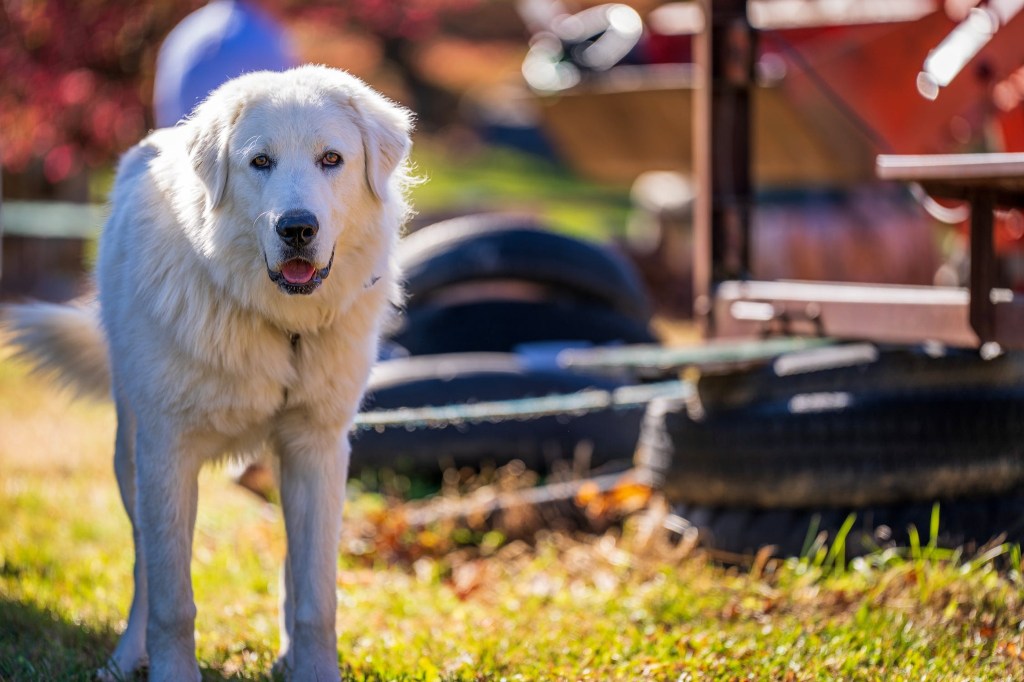
Pictured: Great Pyrenees dog standing on grass. I have seen dogs of this breed be mixed up with Golden Retrievers before – very different dogs!

Sally Lewis 2023

Is it safe for your dog to be out of sight?

Letting your dog disappear out of sight, and staying out of sight ๐Ÿค”is it safe?

First up, I will start by noting that accidents happen and sometimes we can sometimes be caught off guard. But here’s something to think about. Is knowingly letting your dog disappear out of sight a safe thing? (I’m not talking about disappearing behind a bush for a few seconds or popping up in between trees as they dash through the woods..I mean you can’t see them, and have no accurate idea where they are, or what they’re doing).

Today, during an appointment, an off-lead dog approached us and stayed with us for a while. It didn’t look like it had anyone with it. I caught up with it whilst it ambled off, put a lead on it, and we gave the number on the collar a ring. No answer. A short while later we found the human it was with, who was quite a distance away.

I was able to approach that dog, attach a lead, and walk with it. It would have been very easy for a dog thief to do the same thing ๐Ÿ˜ขand the dog was so far away from it’s person that they wouldn’t have seen what was going on or been able to prevent it. My intentions were good in that I was worried about the dog, but we see all too often on social media that not everyone is that way inclined.

Off lead dogs will go behind trees to have a sniff and reappear a moment later, but if your dog is running off and going out of sight to the point where you don’t really know what they are doing, then they could:

โš ๏ธEat something that makes them severely ill

โš ๏ธGet hurt by something on the floor, like sharp glass

โš ๏ธApproach a reactive or nervous dog (these dogs have just as much of a right to an enjoyable walk as any other dog), or a dog that is on a lead for another reason (such as recovering from an injury or having joint pain)

โš ๏ธApproach a person or child who is afraid of dogs, or doesn’t want an unknown dog near them

โš ๏ธWalk in to a road

โš ๏ธBe stolen

โš ๏ธBe livestock worrying or chasing livestock (it only takes a dog moving near sheep in at a moderate speed to cause changes in their behaviour which could effect the health of a pregnant ewe, and the unborn lamb)

These are all reasons I keep my dog in view when we are on walks. As dog guardians, we do have to comply with the law around keeping them ‘under control’, and you have to be able to see them to do this. It is how we keep both our dog, other dogs, and other people safe from any physical or emotional harm.

If your dog doesn’t recall reliably, they might not be ready to be off lead in the environment they are in. Use long training lines attached to a body harness (not attached to a collar), practice practice practice, and slowly increase how distracting the area is for them. Secure paddocks can be a great way to start practicing off lead time.

Sally Lewis 2021

Why does my dog stop on walks?

There are several reasons dogs will stop on a walk, some of the common reasons I will summarise below. I’m not talking about stopping to sniff (normal, let them do it) or stopping because they want to play with the dog over the road. I mean showing reluctance to walk. The key thing is that they are NOT doing it to โ€œgive you a hard timeโ€ or to โ€œget on your nervesโ€. Dogs canโ€™t speak English, it is our job to learn to listen to what they try to tell us through the only means that they can. This means learning to โ€˜speak dogโ€™.

Emotional struggles such as worry or fear: dogs will sometimes freeze on walks for this reason. Note the times that they seem to freeze/stop. Can you spot patterns emerging? E.g. after seeing traffic, after a bus lets off itโ€™s air brakes, after a dog has barked at them, if they are uncomfortable with traffic and are now showing reluctance to walk on pavementsโ€ฆdon’t forget to think about what has happened to them earlier in the day and how this could impact their emotions at the time, too (have they had a trip to the vets or groomers that they found tough?).

Overwhelm: sometimes dogs can get overwhelmed on walks and want to stop walking. Again, observe patterns and triggers. If your dog is becoming worried/overwhelmed on a walk itโ€™s really important you offer them choice to go to somewhere where they feel safe.

Physical discomfort: has your dog been over exercised and might they be aching? Are they a senior dog that might be experiencing joint pain? Do they seem to be reluctant to walk on certain surfaces, for example, tarmac, gravel, or do they want to avoid declines (typically declines can put more weight on certain joints such as elbows and shoulders)? Donโ€™t forget that growing dogs experience growing pains just like us humans, too, so this applies to young dogs just as much as senior ones. There are other health reasons that could cause a dog to stop on walks but these are some common ones relating to joints.

A common misconception is that puppies/adolescents need to be walked to โ€˜tire them outโ€™, but actually, one of the best things you can do for a young dog is let them take it slow, have the time and flexibility (in a safe and appropriate way) to make choices that enable them to feel safe, and engage with stimulus in a way that builds confidence rather than them being hurried on or forced. This will set you up for avoiding things like overwhelm or emotional struggles. For puppies, a walk is not about actually walking.

Sally Lewis 2021

What happens when we let our dogs watch

There’s a lot to be said for letting dogs watch and take things in.

We humans are very quick and very busy. We don’t make a lot of time for taking in things (big or small) and don’t always consider that our dogs need to do this. This can mean we hurry our dogs on in certain situations and interrupt important environmental processing.

I’m not just talking about sniffing, but looking at things and watching, at a distance that your dog feels comfortable and calm at. A lot of learning goes on during this time.

An example could be watching dogs from a distance. If you have a dog that is worried by other dogs, ensure they are far enough away that they feel safe. If your dog can get excited by other dogs, ensure they’re a distance away that helps them to be calm.

Your dog may also stop to watch people, leaves blowing, birds, cars – anything really. Dogs may even choose to sit down, stand, or lie down independently during this time.

My dog used to see a seagull on our walks that he found very interesting because it was in a place that a seagull didn’t really ‘make sense’. Same one every time, because of a marking on its wing and an unusual walk. If I tried to redirect him on every time, that could be really frustrating for him and result in difficulties walking calmly afterwards. Instead, I gave him the chance to watch the seagull for a few minutes when he wanted to. Now he pays little attention to it.

If we start seeing our dog becoming worried, fixated, or over aroused then of course we can get their attention and move them on. Often if they’re in a calm and relaxed state, after a period of looking, they’ll move on when they’re ready anyway.

Next time your dog stops to watch something or suss it out, if they’re calm and relaxed, why not let them do this and give them to opportunity to move on when they’re done, rather than hurry them on because we want to? Make some time for it on your walks.

This additional choice, agency, and ability to suss things out without micromanagement can have a positive impact on behaviour and wellbeing.

Sally Lewis 2023

Why is being able to examine each part of your dog’s body so important?

Recently, my dog was making efforts to keep one of his paws off of the ground on-and-off.

I carefully examined his paw but couldn’t see anything obvious. I looked between each of his toes, and also checked his nails for any cracks or potential painful niggles. Still couldn’t see anything.

I raised his toes slightly to look around his metacarpal pad (this is the biggest pad on your dog’s paw) and could see a small cut in between the metacarpal pad and his toes. I’m canine first aid trained which is really helpful for preventing vets visits for things like this, so was able to clean the area for him and will continue to do this over the next few days. This is an area that gets infected easily due to dirt on the floor and moisture, so it’s important to keep an eye on it and ring the vet if needed.

This process probably took me 5 – 10 minutes to do, during which he received lots of reassurance, praise and some treats.

I’m sure you can imagine, this would be impossible if he was not comfortable with me handling his paws to such an extent. For dogs that do not let people handle their paws, this sort of thing would be very difficult to do without causing distress. Some dogs may even require sedatives to minimise trauma and also so that the area could be examined and treated properly.

So, why can dogs develop sensitivity to areas being touched?

๐ŸพPast trauma e.g. injury or illness. If a dog has required treatment for this that they have struggled with then this could feed in to negative associations (see below).

๐ŸพNegative associations that have been built e.g. if a dog has had an unpleasant experience involving their ears, they might not tolerate ears being handled. For example, ear drops being put in. We know that this is for the benefit of the dog but if they have not liked it, they may dislike their ears being touched over time.

๐ŸพOngoing pain or illness (may be undiagnosed)

๐ŸพOther things that can feed in to this include distrust of the person doing the handling, or stress relating to the wider environment.

Being aware of sensitivities, reasons that your dog has become sensitive to areas being handled, and ensuring that we are taking the right steps to help our dogs be comfortable with this (in whatever form that takes) is really important so that we can provide ongoing care.

It is important to get dogs used to having parts of their body handled from puppyhood, although that isn’t to say that they may not develop sensitivity to part of their body being handled later on. Even if you do not have to do things like daily grooming, you may have to tend to an area due to a minor injury like I did today. Being comfortable being handled and examined is very important for veterinary care and grooming needs.

Sally Lewis 2024