Why is being able to examine each part of your dog’s body so important?

Recently, my dog was making efforts to keep one of his paws off of the ground on-and-off.

I carefully examined his paw but couldn’t see anything obvious. I looked between each of his toes, and also checked his nails for any cracks or potential painful niggles. Still couldn’t see anything.

I raised his toes slightly to look around his metacarpal pad (this is the biggest pad on your dog’s paw) and could see a small cut in between the metacarpal pad and his toes. I’m canine first aid trained which is really helpful for preventing vets visits for things like this, so was able to clean the area for him and will continue to do this over the next few days. This is an area that gets infected easily due to dirt on the floor and moisture, so it’s important to keep an eye on it and ring the vet if needed.

This process probably took me 5 – 10 minutes to do, during which he received lots of reassurance, praise and some treats.

I’m sure you can imagine, this would be impossible if he was not comfortable with me handling his paws to such an extent. For dogs that do not let people handle their paws, this sort of thing would be very difficult to do without causing distress. Some dogs may even require sedatives to minimise trauma and also so that the area could be examined and treated properly.

So, why can dogs develop sensitivity to areas being touched?

๐ŸพPast trauma e.g. injury or illness. If a dog has required treatment for this that they have struggled with then this could feed in to negative associations (see below).

๐ŸพNegative associations that have been built e.g. if a dog has had an unpleasant experience involving their ears, they might not tolerate ears being handled. For example, ear drops being put in. We know that this is for the benefit of the dog but if they have not liked it, they may dislike their ears being touched over time.

๐ŸพOngoing pain or illness (may be undiagnosed)

๐ŸพOther things that can feed in to this include distrust of the person doing the handling, or stress relating to the wider environment.

Being aware of sensitivities, reasons that your dog has become sensitive to areas being handled, and ensuring that we are taking the right steps to help our dogs be comfortable with this (in whatever form that takes) is really important so that we can provide ongoing care.

It is important to get dogs used to having parts of their body handled from puppyhood, although that isn’t to say that they may not develop sensitivity to part of their body being handled later on. Even if you do not have to do things like daily grooming, you may have to tend to an area due to a minor injury like I did today. Being comfortable being handled and examined is very important for veterinary care and grooming needs.

Sally Lewis 2024
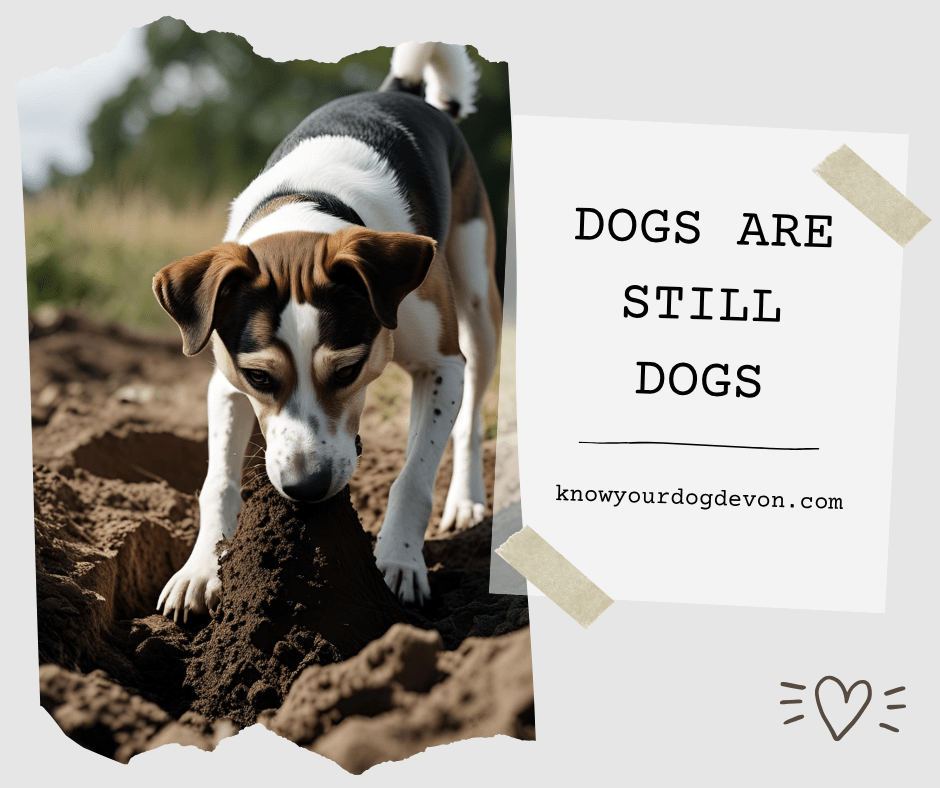
Dogs are still dogs.

Dog ownership has exploded in recent years. Recent studies suggest that at least 36% of homes in the UK have one or more dogs. Thatโ€™s over a third! This means that we are seeing more and more dogs out and about.

What I am also seeing, is more people not understanding that their dog is a dog. Not a cat, not a rabbit, not a robot.

๐ƒ๐ข๐ ๐ ๐ข๐ง๐ , ๐›๐š๐ซ๐ค๐ข๐ง๐ , ๐ซ๐ข๐ฉ๐ฉ๐ข๐ง๐  ๐ฎ๐ฉ ๐ญ๐จ๐ฒ๐ฌ, ๐Ÿ๐จ๐ซ๐š๐ ๐ข๐ง๐ , ๐ฌ๐ก๐จ๐ฐ๐ข๐ง๐  ๐š๐ง ๐ข๐ง๐ญ๐ž๐ซ๐ž๐ฌ๐ญ ๐ข๐ง ๐›๐ข๐ซ๐๐ฌ ๐จ๐ซ ๐ฌ๐ฆ๐š๐ฅ๐ฅ ๐Ÿ๐ฎ๐ซ๐ซ๐ข๐ž๐ฌ, ๐ฌ๐ง๐ข๐Ÿ๐Ÿ๐ข๐ง๐ , ๐ซ๐จ๐ฅ๐ฅ๐ข๐ง๐  ๐ข๐ง ๐ฉ๐จ๐จ โ€“ ๐ญ๐ก๐ž๐ฌ๐ž ๐š๐ซ๐ž ๐š๐ฅ๐ฅ ๐ž๐ฑ๐š๐ฆ๐ฉ๐ฅ๐ž๐ฌ ๐จ๐Ÿ ๐๐Ž๐‘๐Œ๐€๐‹ ๐๐จ๐  ๐›๐ž๐ก๐š๐ฏ๐ข๐จ๐ฎ๐ซ. Yes, there are times when some of these behaviours can become excessive and then we have to look at what might be causing that, but to a point, all of this is normal.

I was recently on a walk and saw a beautiful sighthound walking along. Sighthounds have very developed eyesight, and were bred for detecting the movement of prey, chasing, and catching the prey. They are very speedy, and agile dogs.

This particular sighthound was being walked directly towards a duck that was sat on the grass. We were in a huge area where the duck could have been given a wider berth. The sighthound lunged at the duck, about 2 metres away. No physical harm to the duck, who waddled away and got in to the water. The sighthound however, was told off, shouted at, their collar was grabbed and they were called โ€œnaughtyโ€.

Is this naughty? Or did a hound, bred for hunting, seemingly no other training around wildlife, get walked straight towards a duck while their human made no efforts to engage them in anything else? Is the dog at fault, or is this a case of โ€˜user-errorโ€™?

Donโ€™t get me wrong. My dog used to be quite interested in wildlife! So, we did lots of training, teaching him alternative behaviours on sight of birds and waterfowl. He has safe outlets for prey drive that don’t involve the real deal.

Society’s expectations of dogs has shifted recently. Dogs behaving like dogs can be seen as a problem. People arenโ€™t using good judgment. People choose breeds that were bred for specific purposes, such as alarm barking, guarding, following scents, hunting, herding, and then get cross when they display any of these behaviours. People donโ€™t want to engage with their dogs. ๐“๐ก๐ž๐ฒ ๐ฐ๐š๐ง๐ญ ๐ญ๐ก๐ž๐ฆ ๐ญ๐จ ๐ฃ๐ฎ๐ฌ๐ญ โ€œ๐๐จโ€, ๐š๐ง๐ ๐ฐ๐ก๐ž๐ง ๐ญ๐ก๐ž๐ฒ ๐๐จ๐งโ€™๐ญ, ๐ญ๐ก๐ž ๐๐จ๐  ๐ข๐ฌ ๐ฐ๐ซ๐จ๐ง๐ .

It is on us to offer safe outlets for natural behaviour, to offer training, and manage situations to set our dogโ€™s up for success.

They arenโ€™t born in to the world knowing that our expectation of them is quite different to behaviour that is normal for their species (which I am sure youโ€™d agree, is unfair). They donโ€™t have an off-switch that we can just press for being a dog.

A quick tip for walks, is to engage with your dog. A lot of people take their dogs on walks with them but donโ€™t interact with them a lot. A first step if you want to make changes to your dog’s behaviour is to engage with them when out and about.

Please donโ€™t tell your dog off for being a dog.

www.knowyourdogdevon.com

Sally Lewis 2025