Is it safe for your dog to be out of sight?

Letting your dog disappear out of sight, and staying out of sight ๐Ÿค”is it safe?

First up, I will start by noting that accidents happen and sometimes we can sometimes be caught off guard. But here’s something to think about. Is knowingly letting your dog disappear out of sight a safe thing? (I’m not talking about disappearing behind a bush for a few seconds or popping up in between trees as they dash through the woods..I mean you can’t see them, and have no accurate idea where they are, or what they’re doing).

Today, during an appointment, an off-lead dog approached us and stayed with us for a while. It didn’t look like it had anyone with it. I caught up with it whilst it ambled off, put a lead on it, and we gave the number on the collar a ring. No answer. A short while later we found the human it was with, who was quite a distance away.

I was able to approach that dog, attach a lead, and walk with it. It would have been very easy for a dog thief to do the same thing ๐Ÿ˜ขand the dog was so far away from it’s person that they wouldn’t have seen what was going on or been able to prevent it. My intentions were good in that I was worried about the dog, but we see all too often on social media that not everyone is that way inclined.

Off lead dogs will go behind trees to have a sniff and reappear a moment later, but if your dog is running off and going out of sight to the point where you don’t really know what they are doing, then they could:

โš ๏ธEat something that makes them severely ill

โš ๏ธGet hurt by something on the floor, like sharp glass

โš ๏ธApproach a reactive or nervous dog (these dogs have just as much of a right to an enjoyable walk as any other dog), or a dog that is on a lead for another reason (such as recovering from an injury or having joint pain)

โš ๏ธApproach a person or child who is afraid of dogs, or doesn’t want an unknown dog near them

โš ๏ธWalk in to a road

โš ๏ธBe stolen

โš ๏ธBe livestock worrying or chasing livestock (it only takes a dog moving near sheep in at a moderate speed to cause changes in their behaviour which could effect the health of a pregnant ewe, and the unborn lamb)

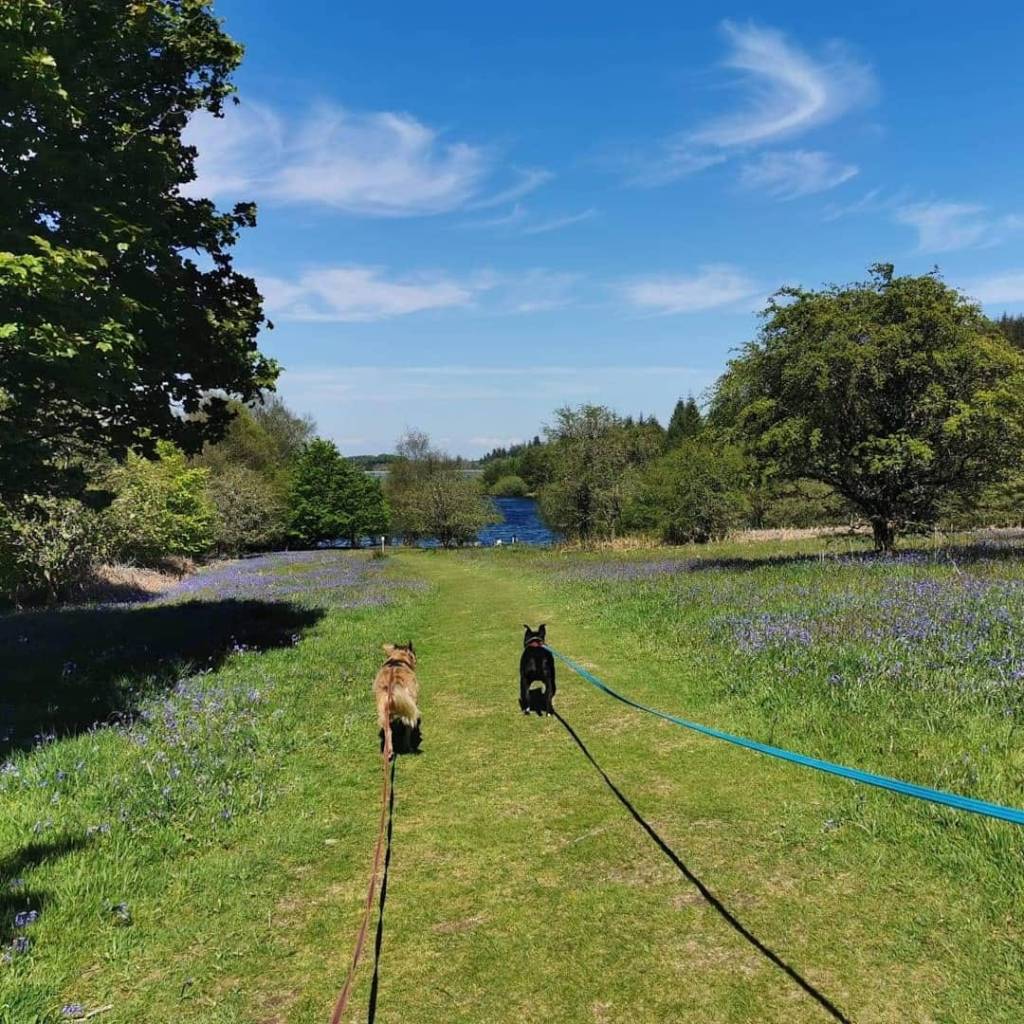
These are all reasons I keep my dog in view when we are on walks. As dog guardians, we do have to comply with the law around keeping them ‘under control’, and you have to be able to see them to do this. It is how we keep both our dog, other dogs, and other people safe from any physical or emotional harm.

If your dog doesn’t recall reliably, they might not be ready to be off lead in the environment they are in. Use long training lines attached to a body harness (not attached to a collar), practice practice practice, and slowly increase how distracting the area is for them. Secure paddocks can be a great way to start practicing off lead time.
Sally Lewis 2021
Why does my dog stop on walks?

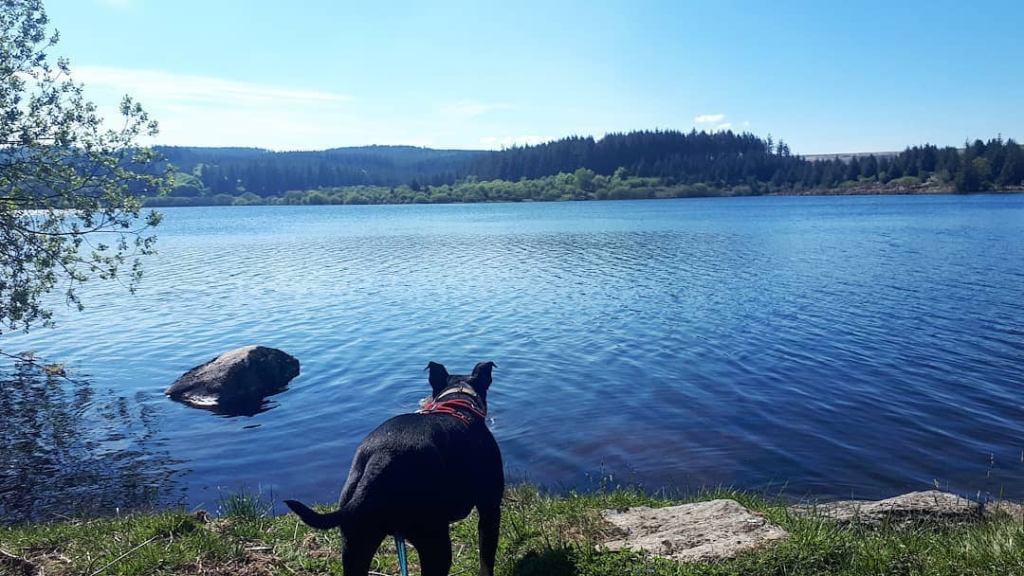
There are several reasons dogs will stop on a walk, some of the common reasons I will summarise below. I’m not talking about stopping to sniff (normal, let them do it) or stopping because they want to play with the dog over the road. I mean showing reluctance to walk. The key thing is that they are NOT doing it to โ€œgive you a hard timeโ€ or to โ€œget on your nervesโ€. Dogs canโ€™t speak English, it is our job to learn to listen to what they try to tell us through the only means that they can. This means learning to โ€˜speak dogโ€™.

Emotional struggles such as worry or fear: dogs will sometimes freeze on walks for this reason. Note the times that they seem to freeze/stop. Can you spot patterns emerging? E.g. after seeing traffic, after a bus lets off itโ€™s air brakes, after a dog has barked at them, if they are uncomfortable with traffic and are now showing reluctance to walk on pavementsโ€ฆdon’t forget to think about what has happened to them earlier in the day and how this could impact their emotions at the time, too (have they had a trip to the vets or groomers that they found tough?).

Overwhelm: sometimes dogs can get overwhelmed on walks and want to stop walking. Again, observe patterns and triggers. If your dog is becoming worried/overwhelmed on a walk itโ€™s really important you offer them choice to go to somewhere where they feel safe.

Physical discomfort: has your dog been over exercised and might they be aching? Are they a senior dog that might be experiencing joint pain? Do they seem to be reluctant to walk on certain surfaces, for example, tarmac, gravel, or do they want to avoid declines (typically declines can put more weight on certain joints such as elbows and shoulders)? Donโ€™t forget that growing dogs experience growing pains just like us humans, too, so this applies to young dogs just as much as senior ones. There are other health reasons that could cause a dog to stop on walks but these are some common ones relating to joints.

A common misconception is that puppies/adolescents need to be walked to โ€˜tire them outโ€™, but actually, one of the best things you can do for a young dog is let them take it slow, have the time and flexibility (in a safe and appropriate way) to make choices that enable them to feel safe, and engage with stimulus in a way that builds confidence rather than them being hurried on or forced. This will set you up for avoiding things like overwhelm or emotional struggles. For puppies, a walk is not about actually walking.

Sally Lewis 2021

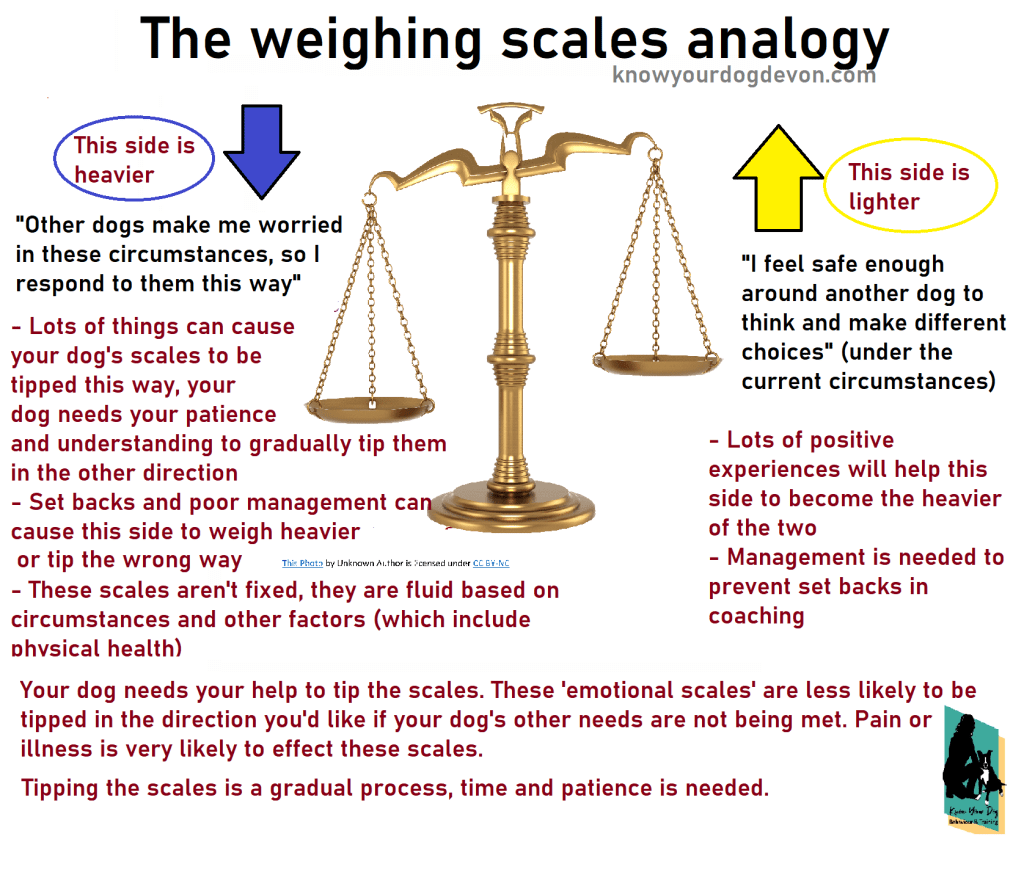
Creating emotional change: the weighing scales analogy

โ€˜The Weighing Scales Analogyโ€™. I’m full of visual analogies! This is one I use with a good chunk of my clients when discussing how we achieve emotional change, so I thought Iโ€™d post about it.

Iโ€™m going to use a dog that barks and lunges at other dogs due to being anxious around them, as an example.

This dog has a set of weighing scales relating to this issue. One side represents being worried by other dogs and feeling the need to react to them in certain circumstances. The other side represents feeling safe and being able to think about the dog and make new choices, in certain circumstances.

Many things can affect the reason that the scales weigh the way they do โ€“ experiences & learning, genetics, physical health (physical health issues should always be treated before behavioural coaching), to name just a few. When coaching dogs to feel differently emotionally, we work to gradually tip the scales. This is not a process that happens quickly due to the way the brain and body work.

The โ€˜safetyโ€™ side is affected by good management (working at the dogโ€™s pace and avoiding stressful exposures), helping the dog to have lots of positive experiences, and helping them to think differently in the situation. This is done at the dogโ€™s individual pace. Imagine placing lots of little pebbles on to that side of the scales, when there is a big rock on the โ€˜negativeโ€™ side. We want to slowly help those scales to tip.

With careful management and effective coaching, the scales will gradually tip. If we have set backs or if management is poor, the scales will tip back the wrong way (just how much depends on the dogโ€™s resilience and ability to recover from events). We must account for this in the case of set backs.

For a dog that is worried by other dogs, this means lots of positive exposure (at a distance your dog is comfortable with), avoidance of being pushed beyond what they might be able to cope with, helping them to build positive associations, think & process, engaging other areas of the brain and calming the nervous system.

Set backs might include management failing (dogs running up to you off lead or popping up where you wouldnโ€™t expect them), trigger stacking, accidentally going beyond the threshold of what your dog can cope with, ill health (to name a few).

Tipping the scales takes patience and understanding. You need to be meeting your dogโ€™s other needs (including health needs) to be successful in tipping the scales. Pain and ill health really effect this process. Once the scales are looking a certain way, they arenโ€™t fixed in place forever, they are fluid so we need to be mindful of our dogโ€™s experience of the world around them.

Sally Lewis 2022

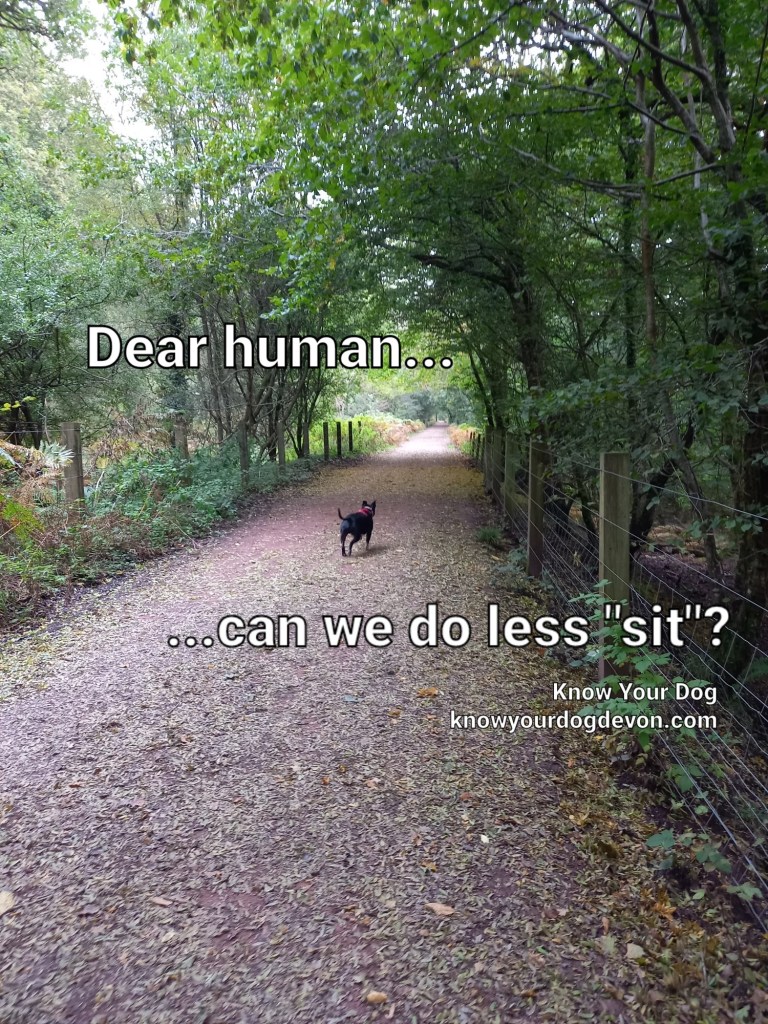
“Sit”

Sit.

Today, I went somewhere new to me. It was busy, with a lot for me to get my head around. I’m not a city girl but the guy I was with insisted that I sit down whilst he looked at his phone. I tried my best to get out of there but I couldn’t move, and kept being asked to sit down. I don’t feel safe. I don’t want to sit down. Why are you making me sit here?

Later we went somewhere quieter, thank goodness. I was happier, until somebody really scary came towards me. They were really intense and I just felt so vulnerable. I wanted to run away, but instead, I was made to sit again. I was held there and I couldn’t do anything. Whenever I got up, I was asked to sit down. The guy I walk with didn’t like it when I didn’t sit. He didn’t seem to understand the things I said to him, or maybe he didn’t care.

The walk home. We have to cross roads to get home. I don’t really like traffic so don’t like to be around it much, I’d rather hurry up home. But there was that word again, at every crossing…”sit”. Doesn’t he know my joints aren’t what they used to be? All this sitting makes me sore. My legs hurt. I remember it hurting when I was younger, too. I got growing pains and did too much running. I can’t seem to get home if I don’t do it, and I really want to be away from this traffic. I stand and wait, I don’t move in to the road, I just don’t want to sit here. I’m not allowed to move unless I sit. My expression should say it all. Please don’t raise your voice. Please don’t press my bum down and force me to do things.

Back home. I just want my dinner and then to go to bed. I can smell it being made so go out to my bowl. My legs hurt from our walk but I don’t get given my food if I don’t sit first.

I am a dog. I don’t always want to, or feel comfortable, sitting down. Sometimes it’s not a comfortable position for me. Sometimes I would rather not be in the environment that I am in, or around certain things. I am not being stubborn. I hear that word sometimes, and I don’t really know what it means. But this “sit”…it’s the first thing I’m taught and the thing I’m asked to do most, even though I try to tell you that I don’t want to sometimes. I know we are best friends and that maybe you just have trouble understanding me. Can we do less of “sit”?

Sally Lewis 2021

Proximity doesn’t always mean your dog wants to be stroked

There is a common misunderstanding that if a dog comes and sits or lies near you, they want you to stroke them. Lots of dogs enjoy closeness and even contact without actually being stroked.

Misreading this is a common reason that dogs will start to give off stress signals, which if ignored, may escalate to a growl to ask you to stop. Unwanted contact may be even more difficult for dogs who are in pain, have touch sensitivities, or dislike certain areas being touched.

How do I know if my dog actually wants me to stroke them, or if they just want to be close?

Your dog may indicate that they want that sort of contact by nudging you, pressing their head in to you, or pawing at you.

How do I know if they want me to stop?

Look out for body language such as excessive blinking, showing the whites of eyes, leaning away, turning their head away, licking their lips, yawning, panting (when they aren’t hot), narrowing eyes, lowering their head. If this sort of thing is ignored then they might escalate to growling.

Why don’t they just walk away?

Not all dogs feel comfortable doing this or they may be conflicted if they want the proximity to you, just not the stroking.

Consent testing

I always recommend consent testing to give your dog a choice. Allow them to indicate that they actually want you to stroke them. If they do, go ahead, and stop after a few seconds. They may ask you to carry on, if they do, stop again after a few seconds. This regular stopping gives them the opportunity to move away if they’ve had enough.

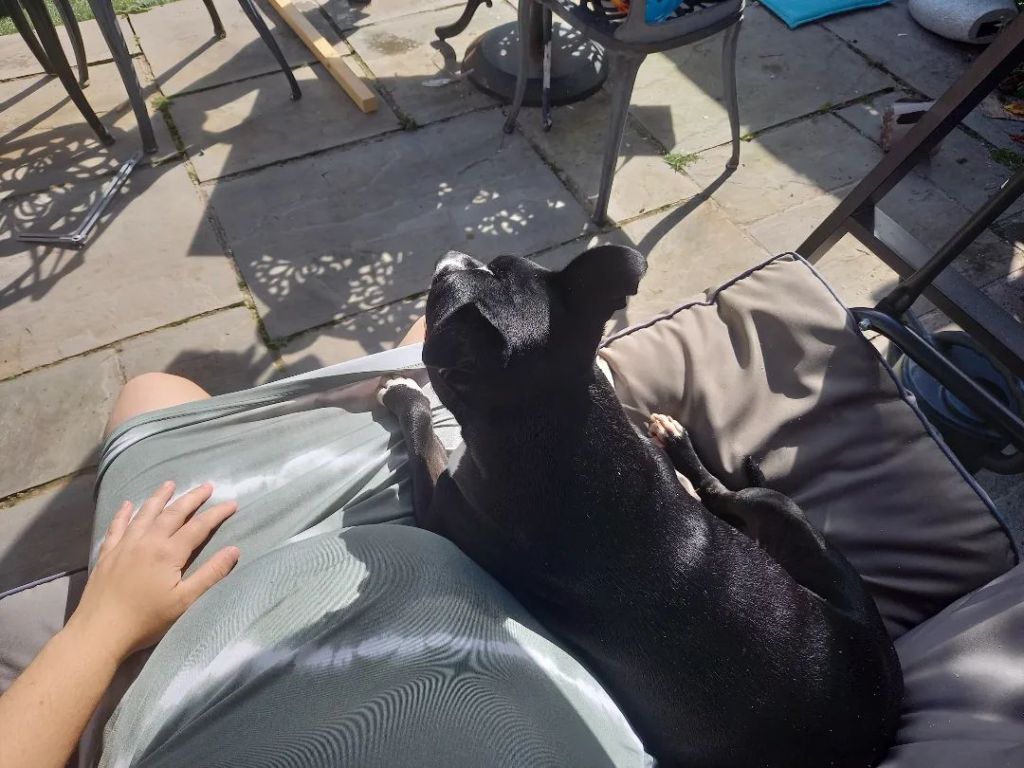
In this photo example, is me and my boy. He loves proximity to us and will even lean against us like he is here. This doesn’t necessarily mean he wants us to fuss him every time he does it. He isn’t the sort to move away on his own because he wants the closeness.

In short…closeness does not always equal consent, and we should ensure physical contact like stroking is choice-based, as an important part of safety around dogs (as part of bite prevention) and to prevent stress to the dog.

To learn more about consent, choice-based methods, and dog body language, pick up your copy of Empowering Your Dog Through Choice on Amazon.

Sally Lewis 2023

โ€œHelp! My dog growls at me if I try to get them off the sofa when theyโ€™re asleepโ€

Have you heard the phrase โ€“ let sleeping dogs lie? That does have some relevance.

I have never been physically removed from a sofa or bed when I am asleep or tired (and I hope you havenโ€™t either!) but I know that if somebody did this to me, I would be unhappy, and it would probably startle me as well. If this happened to somebody, they may snap โ€œleave me aloneโ€ at the person moving them in their sleepy state. The same goes for our dogs.

If your dog is asleep/tired on the sofa or bed and you need them to move, donโ€™t reach down when they are asleep and do this physically. This may result in you being on the receiving end of a growl, or snap. It is important to note that a growl is a healthy communication for SPACE, and not to be punished (or theyโ€™ll stop growling and step up the ladder โ€“ do you want a dog to bite instead of growl?).

First, rouse your dog using your voice to alert them to the fact you are there and bring about their attention. Try to avoid startling them when you do this. Then, use an โ€˜offโ€™ cue (this is something you will need to teach in advance). With your dog on the bed/sofa, encourage them on to the floor by throwing a reward down there, and as they get down, capture this with the word โ€˜offโ€™. After lots of repetition, this can become a cue you use to ask your dog to get down, and you might include a hand signal of waving a hand towards the floor.

If you are thinking “but at 10pm I just want to get in the bed without having to do this”, prior to your bed time, you may need to manage the situation by preventing access to the bed, or encouraging your dog off of it ahead of time and shutting the bedroom door.

It is important to note that dogs that are experiencing pain or illness may be increasingly sensitive to being asked to move off of comfy areas or dislike being roused when they are tired. Other health conditions, or loss in hearing/vision, may result in dogs being startled more easily. If you notice a change in behaviour from your dog, or behaviour that is new or worsening, you should go for a check with your vet, referencing the behaviour you have seen. Dogs that have guarding tendencies (some consider this possessiveness) may also not like you asking them to move off of/away from areas that they value, so if this is the case, guarding should be explored with a qualified and experienced behaviourist for a tailored management and coaching plan.

Sally Lewis 2022

What happens when we let our dogs watch

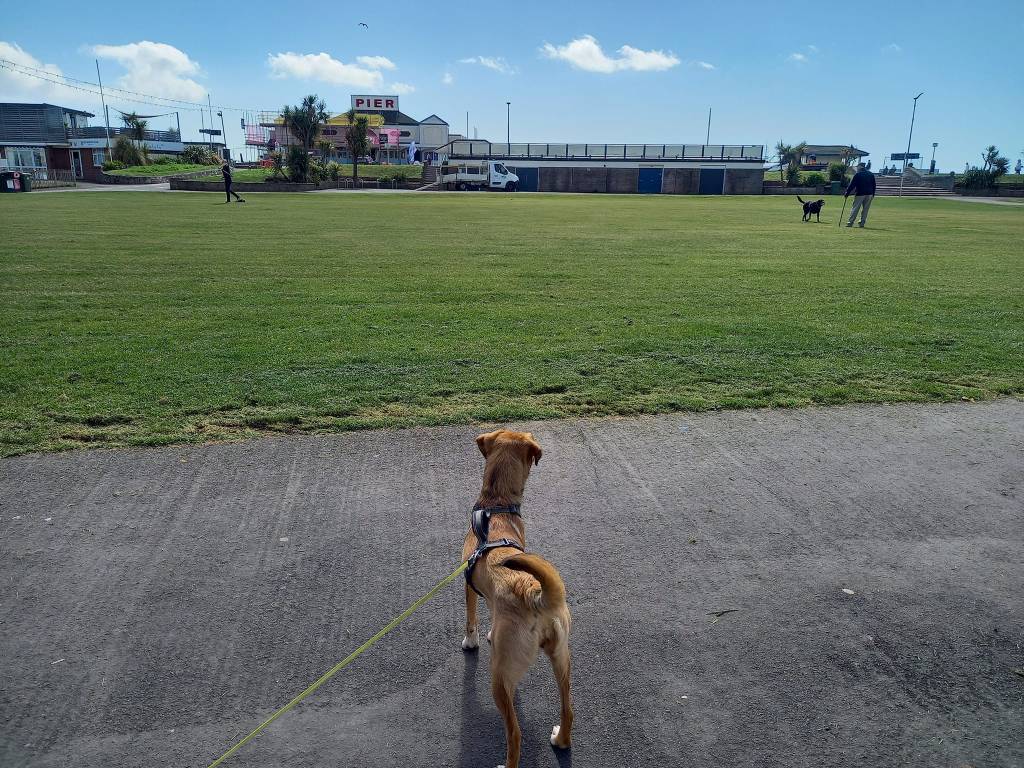
There’s a lot to be said for letting dogs watch and take things in.

We humans are very quick and very busy. We don’t make a lot of time for taking in things (big or small) and don’t always consider that our dogs need to do this. This can mean we hurry our dogs on in certain situations and interrupt important environmental processing.

I’m not just talking about sniffing, but looking at things and watching, at a distance that your dog feels comfortable and calm at. A lot of learning goes on during this time.

An example could be watching dogs from a distance. If you have a dog that is worried by other dogs, ensure they are far enough away that they feel safe. If your dog can get excited by other dogs, ensure they’re a distance away that helps them to be calm.

Your dog may also stop to watch people, leaves blowing, birds, cars – anything really. Dogs may even choose to sit down, stand, or lie down independently during this time.

My dog used to see a seagull on our walks that he found very interesting because it was in a place that a seagull didn’t really ‘make sense’. Same one every time, because of a marking on its wing and an unusual walk. If I tried to redirect him on every time, that could be really frustrating for him and result in difficulties walking calmly afterwards. Instead, I gave him the chance to watch the seagull for a few minutes when he wanted to. Now he pays little attention to it.

If we start seeing our dog becoming worried, fixated, or over aroused then of course we can get their attention and move them on. Often if they’re in a calm and relaxed state, after a period of looking, they’ll move on when they’re ready anyway.

Next time your dog stops to watch something or suss it out, if they’re calm and relaxed, why not let them do this and give them to opportunity to move on when they’re done, rather than hurry them on because we want to? Make some time for it on your walks.

This additional choice, agency, and ability to suss things out without micromanagement can have a positive impact on behaviour and wellbeing.

Sally Lewis 2023

Dogs are still dogs.

Dog ownership has exploded in recent years. Recent studies suggest that at least 36% of homes in the UK have one or more dogs. Thatโ€™s over a third! This means that we are seeing more and more dogs out and about.

What I am also seeing, is more people not understanding that their dog is a dog. Not a cat, not a rabbit, not a robot.

๐ƒ๐ข๐ ๐ ๐ข๐ง๐ , ๐›๐š๐ซ๐ค๐ข๐ง๐ , ๐ซ๐ข๐ฉ๐ฉ๐ข๐ง๐  ๐ฎ๐ฉ ๐ญ๐จ๐ฒ๐ฌ, ๐Ÿ๐จ๐ซ๐š๐ ๐ข๐ง๐ , ๐ฌ๐ก๐จ๐ฐ๐ข๐ง๐  ๐š๐ง ๐ข๐ง๐ญ๐ž๐ซ๐ž๐ฌ๐ญ ๐ข๐ง ๐›๐ข๐ซ๐๐ฌ ๐จ๐ซ ๐ฌ๐ฆ๐š๐ฅ๐ฅ ๐Ÿ๐ฎ๐ซ๐ซ๐ข๐ž๐ฌ, ๐ฌ๐ง๐ข๐Ÿ๐Ÿ๐ข๐ง๐ , ๐ซ๐จ๐ฅ๐ฅ๐ข๐ง๐  ๐ข๐ง ๐ฉ๐จ๐จ โ€“ ๐ญ๐ก๐ž๐ฌ๐ž ๐š๐ซ๐ž ๐š๐ฅ๐ฅ ๐ž๐ฑ๐š๐ฆ๐ฉ๐ฅ๐ž๐ฌ ๐จ๐Ÿ ๐๐Ž๐‘๐Œ๐€๐‹ ๐๐จ๐  ๐›๐ž๐ก๐š๐ฏ๐ข๐จ๐ฎ๐ซ. Yes, there are times when some of these behaviours can become excessive and then we have to look at what might be causing that, but to a point, all of this is normal.

I was recently on a walk and saw a beautiful sighthound walking along. Sighthounds have very developed eyesight, and were bred for detecting the movement of prey, chasing, and catching the prey. They are very speedy, and agile dogs.

This particular sighthound was being walked directly towards a duck that was sat on the grass. We were in a huge area where the duck could have been given a wider berth. The sighthound lunged at the duck, about 2 metres away. No physical harm to the duck, who waddled away and got in to the water. The sighthound however, was told off, shouted at, their collar was grabbed and they were called โ€œnaughtyโ€.

Is this naughty? Or did a hound, bred for hunting, seemingly no other training around wildlife, get walked straight towards a duck while their human made no efforts to engage them in anything else? Is the dog at fault, or is this a case of โ€˜user-errorโ€™?

Donโ€™t get me wrong. My dog used to be quite interested in wildlife! So, we did lots of training, teaching him alternative behaviours on sight of birds and waterfowl. He has safe outlets for prey drive that don’t involve the real deal.

Society’s expectations of dogs has shifted recently. Dogs behaving like dogs can be seen as a problem. People arenโ€™t using good judgment. People choose breeds that were bred for specific purposes, such as alarm barking, guarding, following scents, hunting, herding, and then get cross when they display any of these behaviours. People donโ€™t want to engage with their dogs. ๐“๐ก๐ž๐ฒ ๐ฐ๐š๐ง๐ญ ๐ญ๐ก๐ž๐ฆ ๐ญ๐จ ๐ฃ๐ฎ๐ฌ๐ญ โ€œ๐๐จโ€, ๐š๐ง๐ ๐ฐ๐ก๐ž๐ง ๐ญ๐ก๐ž๐ฒ ๐๐จ๐งโ€™๐ญ, ๐ญ๐ก๐ž ๐๐จ๐  ๐ข๐ฌ ๐ฐ๐ซ๐จ๐ง๐ .

It is on us to offer safe outlets for natural behaviour, to offer training, and manage situations to set our dogโ€™s up for success.

They arenโ€™t born in to the world knowing that our expectation of them is quite different to behaviour that is normal for their species (which I am sure youโ€™d agree, is unfair). They donโ€™t have an off-switch that we can just press for being a dog.

A quick tip for walks, is to engage with your dog. A lot of people take their dogs on walks with them but donโ€™t interact with them a lot. A first step if you want to make changes to your dog’s behaviour is to engage with them when out and about.

Please donโ€™t tell your dog off for being a dog.

www.knowyourdogdevon.com

Sally Lewis 2025